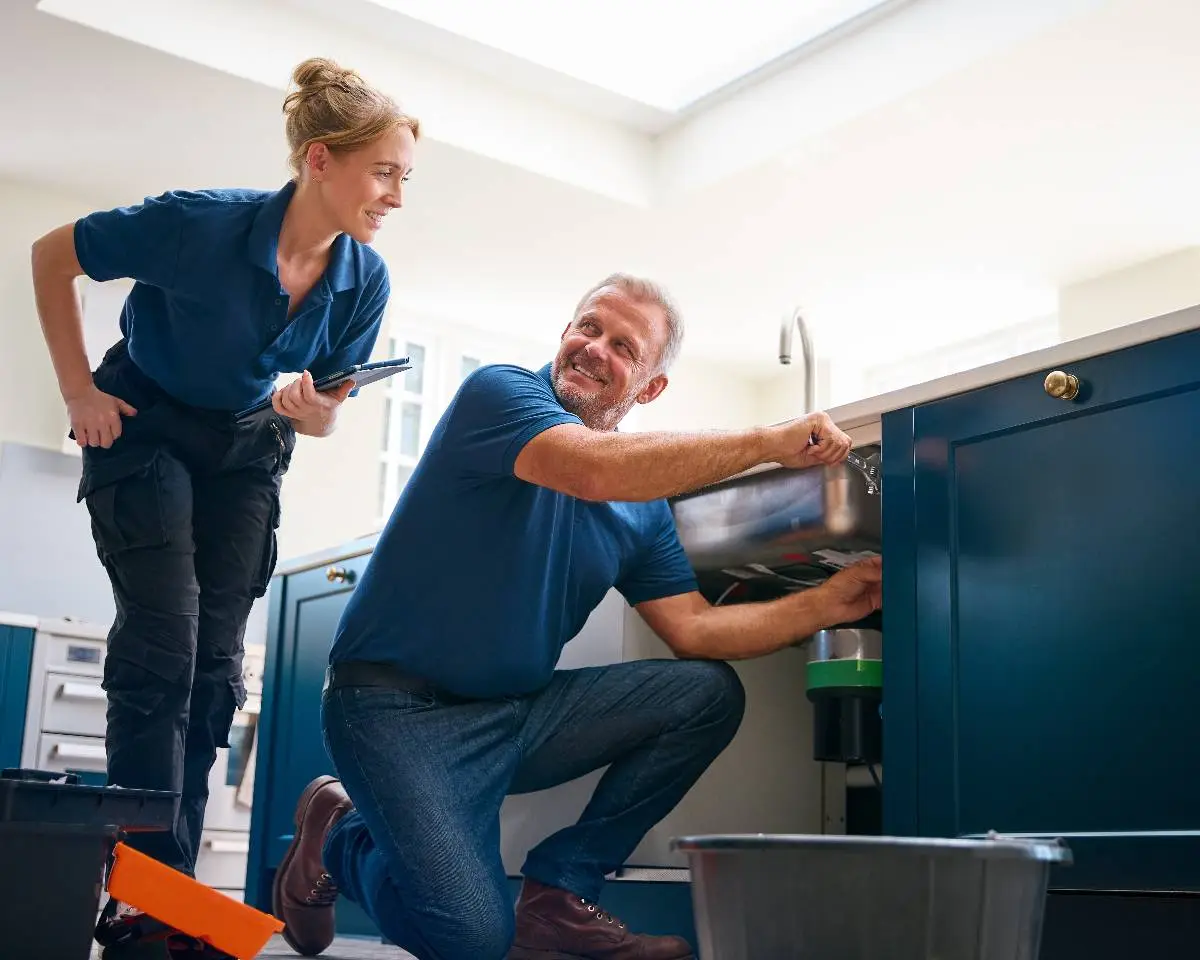
Low water pressure frustrating your daily routine? Learn the real causes behind weak water flow and when you need professional help.
Summary:
Most water pressure issues don’t happen overnight. They build up gradually as your plumbing system ages and various components start working against each other.
Think of your plumbing like your car—everything works great when it’s new, but after years of use, small problems start adding up. A little mineral buildup here, some pipe corrosion there, and suddenly you’re dealing with noticeably weaker water flow throughout your house.
The key is figuring out whether you’re looking at a simple fix or something that requires digging deeper into your plumbing system.
Bay Area water contains minerals that slowly accumulate inside your pipes over the years. It’s like plaque building up in arteries—the more buildup, the less space for water to flow through.
Older homes with galvanized steel pipes face this problem more than newer construction. These pipes were common before the 1980s, and they’re notorious for developing rust and mineral deposits that choke off water flow. If your house was built before 1980 and you’re experiencing pressure drops, there’s a good chance your pipes are the culprit.
Copper pipes handle minerals better but aren’t immune. Hard water areas see more buildup, and even copper can develop restrictions over time. The frustrating part is that this happens so gradually you might not notice until the pressure becomes really weak.
You’ll typically see this problem affecting your whole house, not just one fixture. Hot water pressure often drops first because water heaters accelerate mineral buildup, but eventually cold water pressure follows suit.
The fix usually involves either cleaning the pipes professionally or replacing sections where buildup is too severe. In older homes with extensive galvanized piping, replacement often makes more sense than trying to clean pipes that are already compromised by corrosion.
Sometimes the problem isn’t in your house at all—it’s coming from the street. Municipal water systems can develop issues that affect entire neighborhoods, and aging infrastructure in parts of the Bay Area means this happens more often than you’d expect.
Water main breaks are obvious because they usually shut off water completely, but partial restrictions are sneakier. A partially blocked main line or problems at the water treatment facility can reduce pressure to your whole neighborhood without completely cutting off service.
Here’s how to tell if it’s a municipal issue: check with your neighbors. If they’re experiencing the same pressure drops around the same time, the problem is likely coming from the city’s system, not your individual plumbing.
Pressure reducing valves can also cause confusion. These devices are installed where your water line connects to the municipal system, and they’re designed to protect your plumbing from excessive pressure. But when they malfunction or get set incorrectly, they can choke off your water supply.
Most homeowners don’t even know these valves exist until a plumber points them out. They’re usually located near your water meter or where the main line enters your property. If yours is failing, you’ll see pressure problems throughout your house that can’t be fixed by working on individual fixtures or pipes.
The good news is that municipal problems usually get fixed relatively quickly once reported. Pressure reducing valve issues require a plumber but are typically straightforward repairs that restore normal pressure immediately.
Not all water pressure issues are simple fixes. Some point to problems that require immediate attention from an experienced plumber, especially when underground pipes or sewer systems are involved.
If you’re seeing pressure drops combined with other symptoms—like water discoloration, unusual sounds, or wet spots in your yard—you’re probably dealing with something more complex than mineral buildup.
These situations often require specialized equipment and expertise that goes beyond basic plumbing repairs.
Underground pipe problems are among the most serious causes of low water pressure, and they’re more common in the Bay Area than many homeowners realize. Shifting soil, tree roots, and aging infrastructure create perfect conditions for underground pipe failures.
The tricky part is that underground leaks don’t always show obvious signs. You might notice your water bill creeping up, soft or soggy spots in your yard, or pressure that seems to get worse over time. But sometimes the only symptom is gradually declining water pressure throughout your house.
Tree roots are particularly problematic for underground pipes. They’re drawn to the moisture around pipe joints and can infiltrate even small cracks, eventually growing large enough to block water flow or break pipes entirely. Older neighborhoods with mature trees see this problem frequently.
Sewer line issues can also affect water pressure, especially in homes where water and sewer lines run close together underground. When sewer lines back up or break, they can put pressure on water lines or cause soil shifts that damage water pipes.
Diagnosing underground pipe problems requires specialized equipment like cameras and pressure testing tools. Many plumbers don’t have this equipment or the experience to handle excavation work, which is why these problems often get misdiagnosed or incompletely repaired.
If you suspect underground pipe issues, you need a plumber with excavation equipment and experience working below ground. Trying to fix these problems without proper equipment usually leads to more damage and higher costs down the road.
When low water pressure affects multiple fixtures throughout your house, you’re usually dealing with a main line problem rather than individual fixture issues. This is where many homeowners get frustrated because the obvious fixes don’t work.
Replacing showerheads, cleaning faucet aerators, and other DIY solutions only help when the problem is localized to specific fixtures. When your whole house has weak pressure, the issue is upstream in your main plumbing system.
Main water lines can develop problems anywhere from your connection to the municipal system all the way to where they branch off to individual fixtures. Older homes often have undersized main lines that can’t deliver adequate pressure when multiple fixtures run simultaneously.
Pressure tanks and well systems add another layer of complexity for homes not connected to municipal water. These systems have pumps, tanks, and pressure switches that can fail or need adjustment. When they’re not working properly, your whole house suffers from inconsistent or weak water pressure.
Water heater problems can also create system-wide pressure issues, especially when they’re connected to recirculation systems or when internal components fail and restrict flow. Many homeowners don’t realize their water heater affects cold water pressure in some plumbing configurations.
The key is having someone with experience in complex plumbing systems diagnose the root cause. Too many homeowners spend money on partial fixes that don’t address the real problem, especially when multiple systems are involved or when the issue requires excavation to access underground components.
Low water pressure problems range from simple fixture clogs to complex underground pipe failures. The key is getting an accurate diagnosis so you’re not wasting money on fixes that don’t address the real issue.
If you’re dealing with system-wide pressure problems, underground pipe concerns, or you’ve gotten estimates that seem excessive, it’s worth getting a second opinion from someone with specialized equipment and experience in complex plumbing projects.
We’ve been handling these exact situations in the Bay Area since 2007, with the excavation equipment and expertise needed for underground pipe problems and complex pressure issues that other contractors can’t properly diagnose or repair.
Continue learning:
 call today